A First Visit to the Paddock: Watch the Ring, Not Just the Runners
A first visit to the paddock makes more sense when you watch its shared routine: see how horses, handlers and racegoers gather before the race.
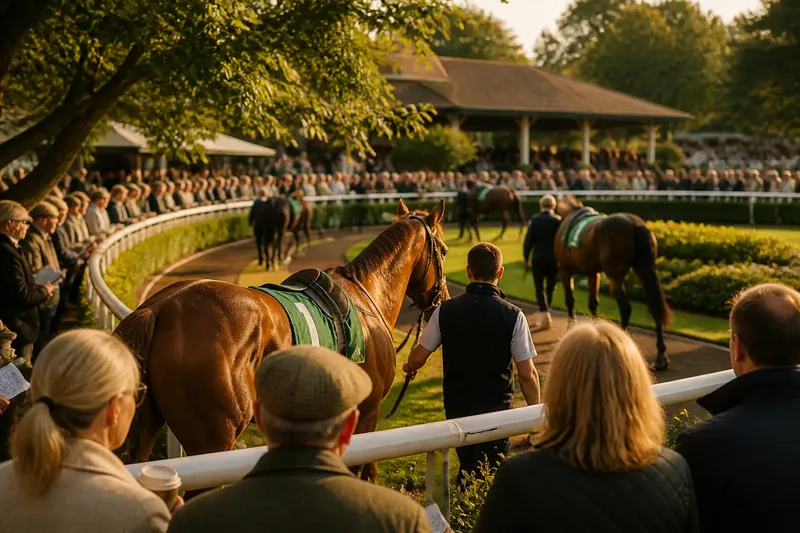
What should you watch on a first visit to the paddock? Start with the ring itself: a first visit to the paddock is easier to understand when you notice how horses, handlers and racegoers share the space before a race. The horses are the focus, but the gathering around them is part of the occasion, too.
A paddock is generally the area where runners are brought before their race, though the layout and routine vary between racecourses. You may hear the same space called the parade ring. Rather than trying to interpret every movement, watch how the group assembles, circulates and eventually leaves together.
What is happening in the paddock before a race?
The paddock gives racegoers a chance to see the runners close up before they head towards the start. Horses arrive with their connections, often including a handler or groom, and walk around the ring while people look on. The period is brief, but it has a clear rhythm: arrival, circulation, a pause for people to gather, then departure.
That rhythm helps explain why the paddock is more than a place to inspect a horse. It is a meeting point in the racecourse’s public life, where people with different roles share a little time before the action moves elsewhere. Some racegoers watch quietly; others exchange comments or greet companions. The horses remain the centre of attention without making the gathering feel like a formal presentation.
At some meetings, the paddock may be busy and tightly arranged. At others, the viewing area can feel open and unhurried. The racecard or venue information can help you understand where the ring is and when runners are expected to appear, but simply arriving early enough to settle in is often the most useful preparation.
Where should a first-time visitor stand?
Choose a spot where you can see part of the ring without blocking anyone’s view or standing in a route used by staff. A position near the outside of the viewing area usually lets you observe the horses as they pass, while leaving room for people to move. If a rail, marked boundary or sign directs spectators, follow it.
There is no need to claim the best vantage point. A view of one section of the circuit is enough to notice that the horses do not simply line up and wait. They walk, turn, pass one another and continue around the ring, while handlers guide them through the shared space. If you lose sight of a runner behind a crowd, wait for it to come around again rather than pressing forward.
Keep bags close and avoid leaning over a rail or reaching towards a horse. A quiet, considerate presence makes the viewing area more comfortable for the people around you and leaves handlers room to do their work. Children should stay with an adult, especially in a crowded ring where attention can shift quickly as the field departs.
Why watch the people as well as the horses?
The paddock’s social pattern can be as revealing as its layout. Watch how the handler stays close to the horse, how other connections gather nearby, and how spectators form a loose circle around the path. These roles are not interchangeable: the people responsible for the horse need to move with it, while visitors are there to observe from the permitted area.
You may also notice that not everyone is looking at the same thing. One person follows a particular horse, another watches the whole group, and someone else seems to be waiting for a familiar face. That mix is part of the tradition. A race meeting is a public gathering, but the paddock makes its working relationships visible alongside its social ones.
Imagine you arrive while the first few horses are already circling and do not recognise any names on the racecard. You choose a place beside the outer rail, read the runners’ names as they pass, and watch how the handlers keep each horse moving through the same circuit. By the time the group leaves, you have a clearer sense of the field as a shared procession, even without trying to judge which runner will win.
What does the parade tell you, and what does it not?
The parade lets you see the runners and their connections in a setting that is more open than the starting area. You can observe the order in which horses appear, the pace of the circulation and the way the group begins to move out. Those are visible details, not secret signals that need decoding.
It is sensible to resist turning every gesture into a prediction. A horse may pause, look around or move with more energy than another, but a brief view does not explain why. The paddock is not a dependable shortcut to a race outcome, and this visit does not need to become a betting exercise to be worthwhile.
What is not worth the effort is trying to memorise every movement or assign a confident meaning to each one. You will see only a short slice of the pre-race routine, often from one angle and among other spectators. Letting that limitation stand keeps attention on what the paddock actually offers: a chance to see the horses and people gather before the race.
When do the horses leave the paddock?
The runners leave when the pre-race routine moves on, and the precise timing depends on the meeting. You will usually notice the change in the group before you need to know its schedule: handlers begin guiding horses away, and spectators turn their attention towards the exit or the next viewing point.
If you want to follow the field, look for signs and staff directions rather than trying to move alongside a horse. Some racecourses provide an accessible route from the paddock towards another public viewing area; others separate spectators from the horses’ route. Give the procession space, then decide whether you want to follow it or remain where you are.
Leaving the ring is part of the scene, not an invitation to crowd around the departing runners. The group is moving from a public gathering towards the next stage of race preparation. Watching from behind the boundary lets you see that transition without becoming part of the horses’ path.
How should you behave around the paddock?
Follow the racecourse’s posted instructions, stay on the spectator side of barriers and keep your voice and movements measured near the horses. Avoid calling to them, touching them or using a phone in a way that blocks someone else’s view. If a staff member asks people to move, do so promptly.
Photography is common, but a camera should not turn a shared viewing area into a private spot. Take care not to hold a phone high for long periods, push into a crowd or step into a restricted area for a clearer picture. If you are unsure whether a particular space is open to visitors, ask a member of staff rather than guessing.
Accessibility needs also affect where a visitor can comfortably watch. Check the course’s visitor information for accessible viewing areas or ask staff about the clearest route. A less crowded position can offer a better view than standing in the busiest part of the ring, and there is no single correct way to experience the parade.
What questions help you notice more on a first visit?
Is the paddock the same as the parade ring?
The terms are often used for the area where runners are shown before the race, though course layouts and local usage can differ. Follow the signs at the venue, since they identify the public viewing area and any boundaries.
How long should I stay in the ring?
Stay for as much of the parade as interests you, then move when the horses depart or the crowd shifts. You do not need to see every runner from every angle to understand the routine.
Can I speak to a trainer or handler?
Connections may be occupied with preparations, so do not interrupt someone who is working with a horse. If a racecourse offers a public event or conversation with staff, use that setting for questions instead.
Should I study the racecard while watching?
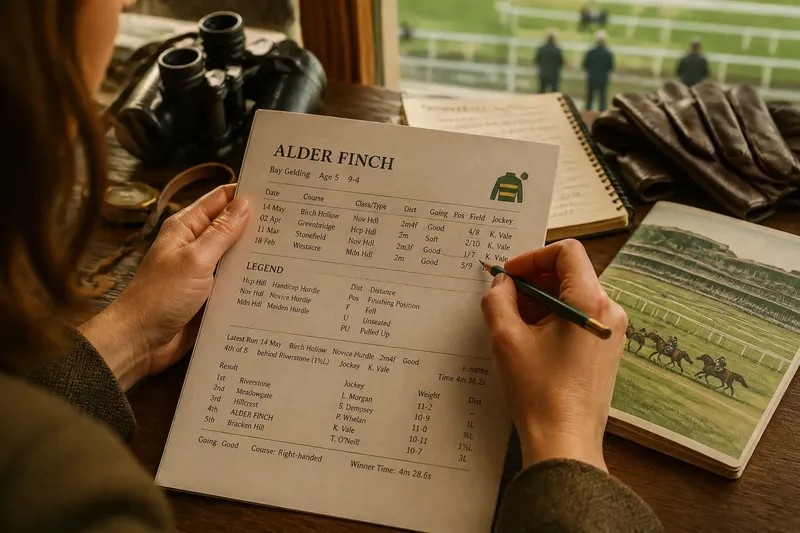
A racecard can help you match names to runners, but it is fine to put it away and watch the movement of the group. The paddock is easier to appreciate when you allow your attention to shift between the horses and the people around them.
What makes the paddock worth a visit?
The paddock offers a particular kind of closeness: not access to the horses, but a clear view of the moment when a race’s participants gather in public. You can follow the circuit, notice the handoffs between people and see the crowd turn towards the same procession. That is enough to make the space legible without treating it as a puzzle.
On a first visit to the paddock, keep your attention broad and your position considerate. Watch the ring as a shared routine, let the racecard serve only as a quiet aid, and leave interpretation of uncertain signs aside. The most useful detail may be the simplest one: horses and people arrive separately, circle together, and then move on when the race is ready to begin.