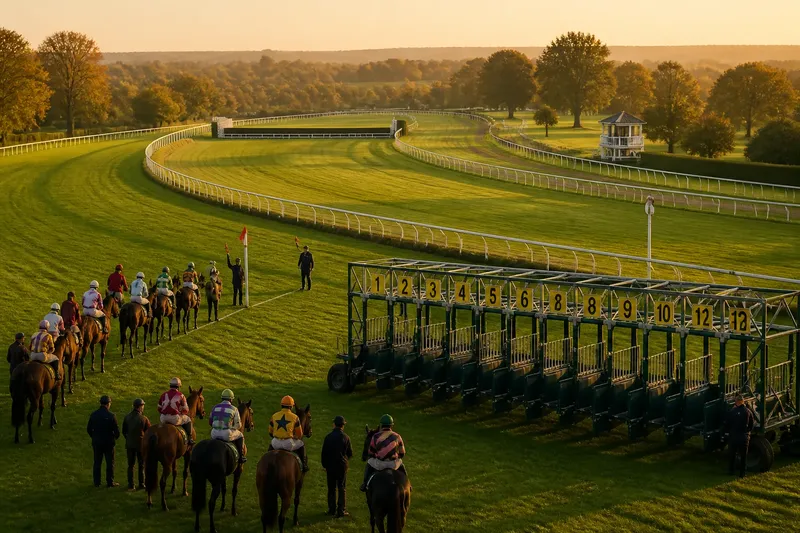
Straight Track or Turning Course: Two Different Ways to Watch
Straight track or turning course viewing: compare how each layout shapes a spectator’s view and choose a spot that suits the part of the race you want to follow.
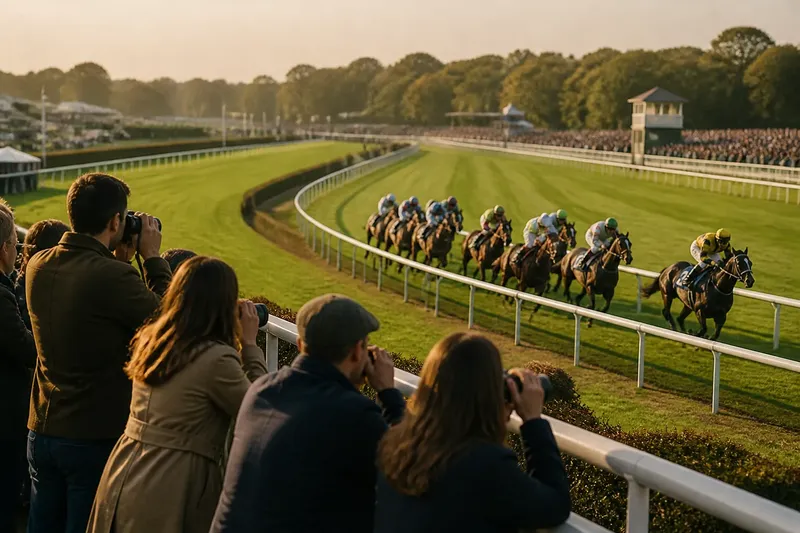
Which is easier to follow from the rail: a straight track or a turning course? For straight track or turning course viewing, the answer depends less on the shape alone than on what you want to track: the field’s changing spread, the path of one runner, or the moment the finish comes into view.
A straight gives you time to compare the field
Along a straight, horses travel in one direction without negotiating a turn during that section. From a clear vantage point, you can compare how the field is distributed across the course and notice when a runner moves toward the rail, drifts wider, or begins to fall behind.
The view can be calm but not necessarily close. At a distant spot, individual details may be hard to distinguish; near the finish, the passage is vivid but brief. A useful position depends on whether you want to watch the runners approach, compare their paths, or see the final rush past.
Even a straight does not offer an uninterrupted view by itself. Buildings, rails, trees, and the angle of the public area can obscure part of the course. Check the sightline to the section you care about instead of assuming that a long, open stretch will be visible from every spot.
A turn reveals how runners negotiate space
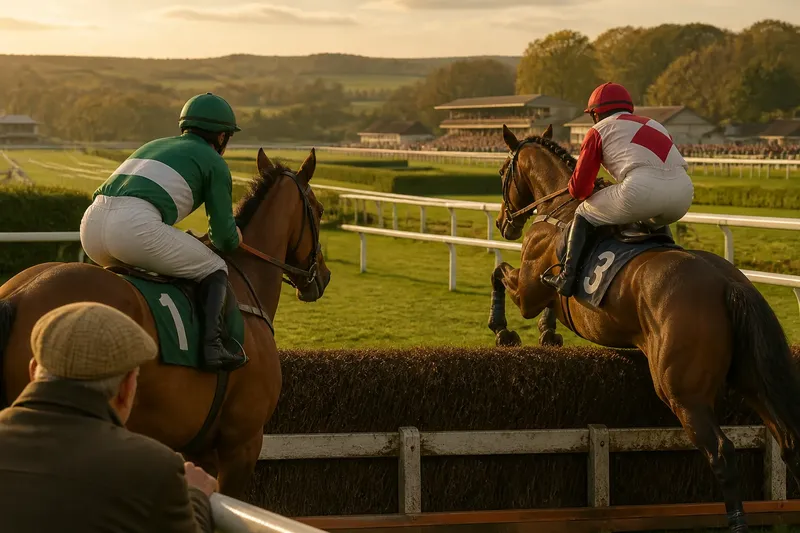
A bend changes the direction of travel and can alter what a spectator sees. Horses may line up behind one another from a particular angle, then become visible again as they round the curve. The apparent order can be difficult to judge while one runner briefly screens another.
Watching a turn is useful if you want to follow how runners enter, travel around, and leave the curve. The view also has limits: the course itself or a fixed obstruction may conceal part of the action. A spot near the exit can show the field as it straightens, but may hide its approach.
Rather than treating the bend as a single spectacle, notice the transitions at its edges. The approach shows how the field arrives; the exit shows how it fans out or remains grouped. Those are different views, and one fixed position may not show both clearly.
Choose a vantage point for the phase you want to follow
Before picking a place, decide what you want to be able to see. A course map and the venue’s public viewing areas can help you identify which sections are visible, where structures interrupt the view, and whether moving between areas is practical.
- For the length of a straight: Check whether the path is unobstructed from your position. If the whole stretch is visible, use it to compare how the field spreads; if not, choose the clearest section rather than trying to follow the full run.
- For the approach to a bend: Check whether the inside rail and the incoming runners are visible. If they are, watch how the field arrives; if a building or barrier blocks them, choose a position with a clearer angle.
- For the exit from a bend: Check whether runners reappear before reaching the next straight. If so, you can follow how the group emerges; if the curve still hides them, shift farther along the public viewing area when permitted.
- For the finish: Check whether you can see the final approach as well as the line. If the approach is hidden, choose between watching the decisive passage or finding a spot that shows more of the route from farther away.
- For a broad overview: Check whether an elevated public area is open and gives a clear view across the course. If it does, use it to follow the field’s overall shape; if individual runners are hard to distinguish, move closer when access allows.
- For more than one phase: Check the distance and permitted routes between viewing areas. If changing places is straightforward, move before the next race; if it would mean missing the action, stay where the relevant section is clearest.
Say you arrive at a course map showing a bend that leads onto a visible straight. Imagine your goal is to see how the field spreads after the turn. First, identify a public area with a clear view of the exit; next, check whether the straight remains visible from there. If both sections are open, stay put and watch the group emerge and fan out. If a structure blocks the straight, choose the exit view and accept that you will not see the later stretch as well.
It is not worth chasing a perfect angle or trying to keep every horse in sight at every moment. A useful viewing place makes one part of the race legible; it does not need to reveal the entire course.
What do spectators ask about course views?
Can you see every runner on a straight course?
Not always. Distance, barriers, and viewing angle can make runners difficult to distinguish or hide them briefly, even when the stretch itself has no turn. Look for an unobstructed view of the section you most want to follow.
Why can a runner seem to disappear on a turning course?
From one angle, horses can pass behind one another as they round the bend, and venue structures can block the view as well. A runner may reappear after the curve, so a brief loss of sight does not by itself tell you where the horse is positioned.
Is the finish the best place to watch?
The finish gives you a clear focus for the final passage, but it may not show how the field reached the line. Choose it if the decisive moment matters most; choose another visible section if you want to follow the runners earlier in the race.
Which layout is easier for a first-time spectator?
A straight may make it easier to compare the field across an open section, while a bend gives you a view of runners changing direction and sometimes obscuring one another. The actual sightlines matter as much as the layout, so use the venue map to judge what will be visible from public areas.
Use the course map to settle the choice
Trace the route from start to finish on the map, then compare it with the public viewing areas. Mark where a turn begins, where a structure may interrupt your view, and whether the finish can be seen from the same place as the approach. This helps you choose based on the section you want to follow, not simply on proximity to the rail.
For straight track or turning course viewing, the best choice is the layout and position that make your preferred part of the race easiest to follow. A straight can make the field’s spread easier to compare; a turn can make the passage through a curve easier to observe. Once you arrive, adjust only if a clearer public sightline is available without making you miss the race.